We all know someone with a rounded upper back, a forward head and shoulders, and who generally finds it difficult to keep their back straight (they try, but as soon as they relax, they end up slouching again). Poor posture is more noticeable when they stand for a long time or sit down.
What if you were told that it is not just poor posture, but that it has a name?
Upper crossed syndrome (“upper crossed syndrome” in English) encompasses the entire mechanism that causes and perpetuates poor posture. It consists of an imbalance between antagonist muscles (or muscles that perform opposing functions), as shown in the image: some muscles are constantly activated, so they become tight and shortened, while others are lengthened, so they gradually weaken and become inhibited.
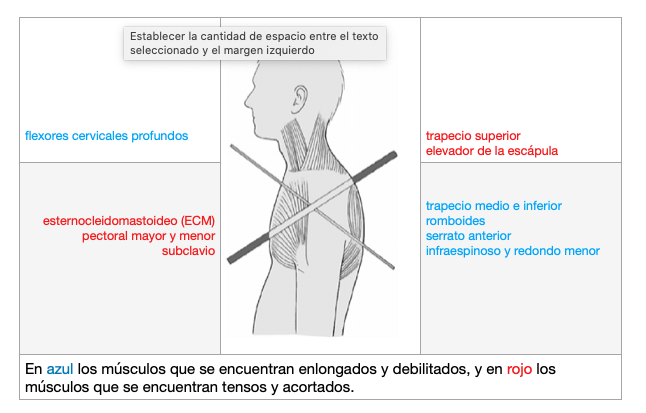
Sustained neck flexion causes the deep cervical muscles and the upper back musculature to lengthen, and shortens and tightens the SCM. Forward, medially rotated shoulders lengthen the posterior shoulder musculature and shorten the pectorals.
The syndrome is more common in predisposed individuals, mainly due to poor posture during activities such as sitting at a computer, reading, or doing household tasks, but it is also influenced by anxiety, stress, and a sedentary lifestyle.
A forward head and shoulder posture causes neck pain and headaches, and may even cause pain in the area between the shoulder blades. It can even affect the jaw muscles.
At the beginning, the imbalance can be corrected, so early diagnosis and starting appropriate therapy with specific exercises are important. Over time, the posture becomes fixed, meaning it becomes rigid and difficult to change, as adhesions form in the tight muscles and the weakened muscles stop performing their function. This muscle imbalance leads to changes in spinal alignment:
- thoracic hyperkyphosis: the overload on the vertebrae in the anterior region due to increased kyphosis causes them to become compressed, further fixing the deformity.
- cervical hyperlordosis: the neck increases its curvature to compensate for the posture and overloads the facet joints, which further increases neck pain.
The older you are, the worse the problem, as the anatomy of the spine is less elastic and compensates less effectively.
If you identify with the image, it is recommended that you see a spine specialist so that, through an examination and an X-ray, they can determine whether there is any specific spinal alteration in your case or whether it is upper crossed syndrome, which is the most common.
We will also assess the severity of your case and provide sports and exercise advice to complement the specific therapy.