
Cycling is an aerobic activity and a low-impact alternative to running, which is why it has an increasing number of enthusiasts of all ages. On a bike, we can generally cover more kilometers and train for longer hours than running, and it is compatible with one of the most deeply rooted and beloved Valencian traditions…l’esmorsar.
Experiencing neck pain or lower back pain is common among cyclists due to body position during the activity. The back flexes to reach the handlebars and the neck extends to look forward, for an extended period of time. Up to 44% of men and 55% of women consulted at some point for neck pain, and 30% in both sexes for lower back pain.
In most cases, the neck pain problem is caused by improper bike adjustment or using an incorrectly sized bicycle. If the distance between the saddle and the handlebars is excessive, the neck is forced to hyperextend more (raise the forehead upward) and muscle tension can develop.
An interesting fact…Cyclists often have muscle tension in the left levator scapulae because they frequently turn to check traffic when riding on the road.
If you experience neck pain when cycling, it is essential that you check your bike adjustment. To avoid poor neck position, you can:
- raise the handlebars (low handlebars force the neck to hyperextend).
- use handlebars with less drop or a shorter stem
- in some cases, the handlebar material may make the position on the bike more or less comfortable, but there is no evidence that it affects the neck
- the handlebars should be the same width as the shoulders, as otherwise the trapezius and rhomboids become overloaded.
- move the saddle forward (but this should be done carefully as it can negatively affect the knees during pedaling)
- check that your helmet fits properly; when looking up, you should barely see the front area; otherwise, without realizing it, you will hyperextend your neck to see better.
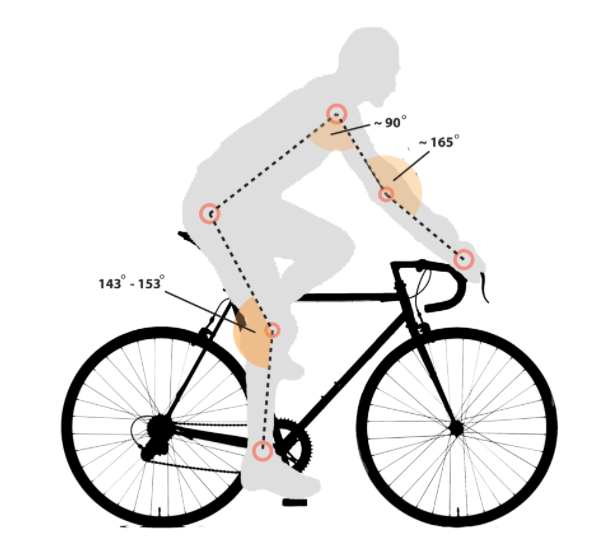
Of course, unless you are a bicycle expert, I recommend that recreational cyclists consult a professional so that adjustments are correct and personalized.
In other cases, especially among triathletes, neck pain is caused by overtraining or a change in routine, duration, or exercise intensity. Excessive training without adequate rest causes microtraumas from overload to accumulate in the tissues, activating the body’s inflammatory response, which causes sports injuries, especially in muscles and tendons. If this is the case, it is advisable to make adjustments to training and respect rest periods to avoid accumulating tissue damage.
If you are a cyclist, follow these tips to prevent neck pain:
- warm up your neck (for example, by doing circles) before starting
- avoid keeping your shoulders and arms rigid on the handlebars as this affects the neck; instead, relax your shoulders and keep your elbows slightly bent.
- check your bike and helmet adjustment with the help of a professional.
- stretch your trapezius, scalenes, and scapulae when finished.
If the pain persists despite these adjustments, do not hesitate to schedule an appointment so we can evaluate your case.